
A historical journey through the streets and houses of Trowse Newton.
Appendix 1 - Townscape and Buildings
(1) Kirby Road
Characterised by the contrast between, on the south side, Crown Point Villas and Blockhill Cottages and, on the north side, a flint retaining wall, a steep bank and a belt of woodland, Kirby Road is attractive, if somewhat sunless and hemmed in.
The road is truncated just beyond Blockhill Cottage where it meets Julian Drive, a late twentieth century development of mainly detached, Georgian style houses that has been built between the bypass and the line of Kirby Road. The former field boundary to the old Kirby Road has been supplemented with additional tree planting to narrow the thoroughfare as a footpath leading to Kirby Bedon and Poringland.
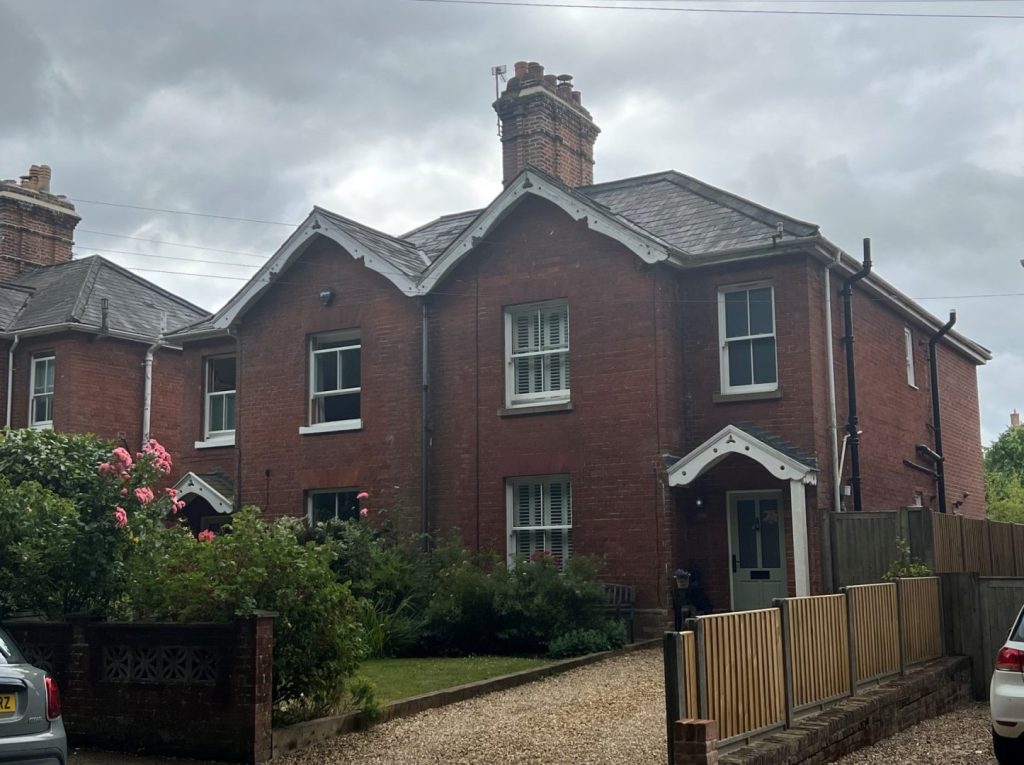
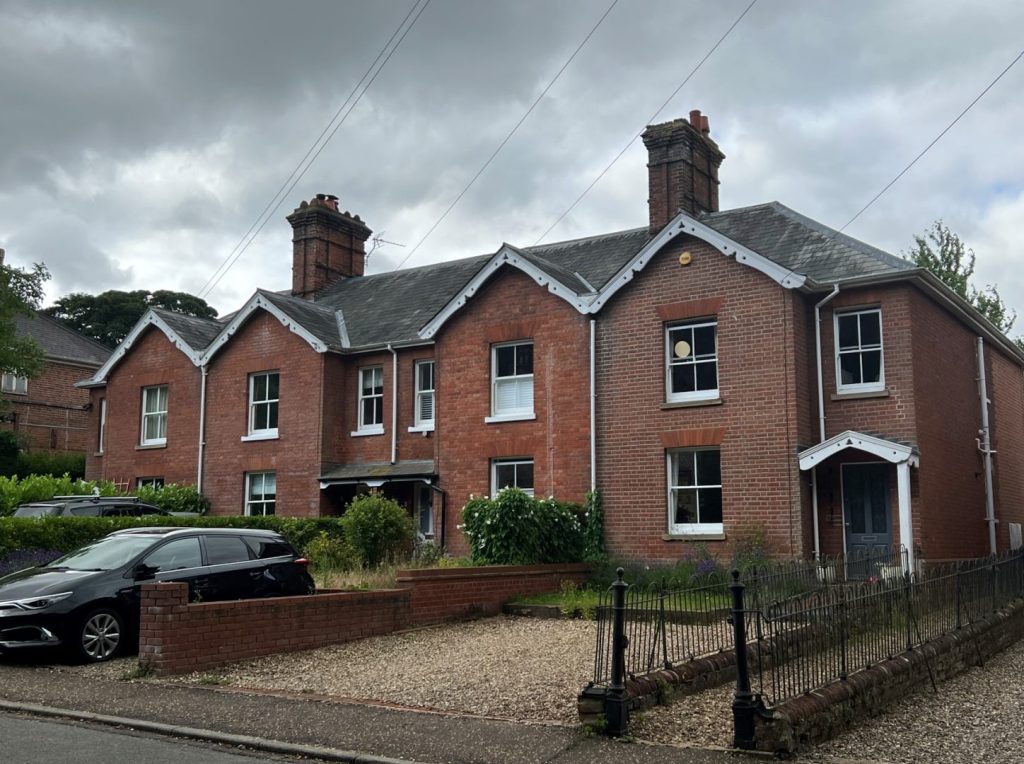
On the south side, Crown Point Villas comprise three pairs of semi-detached houses (left photograph) and a short terrace of four (right photograph). They have hipped slate roofs with forward projecting gables, ornamental bargeboards to gables and open porches with similar bargeboards. Original windows have large-paned sashes, although the majority have been replaced with a variety of styles and materials. The only original front railings to survive are those of No.4, although some of the side boundary railings remain. The frontages to Nos. 6, 7, 8, 9 and 10 have been opened up to provide parking.
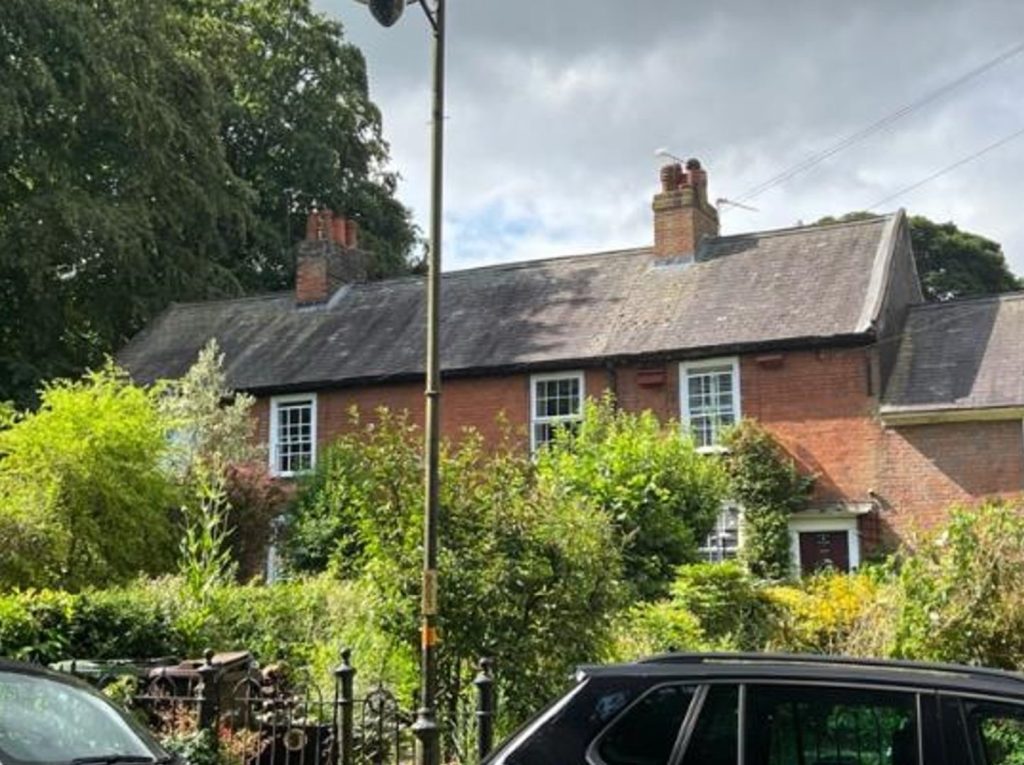
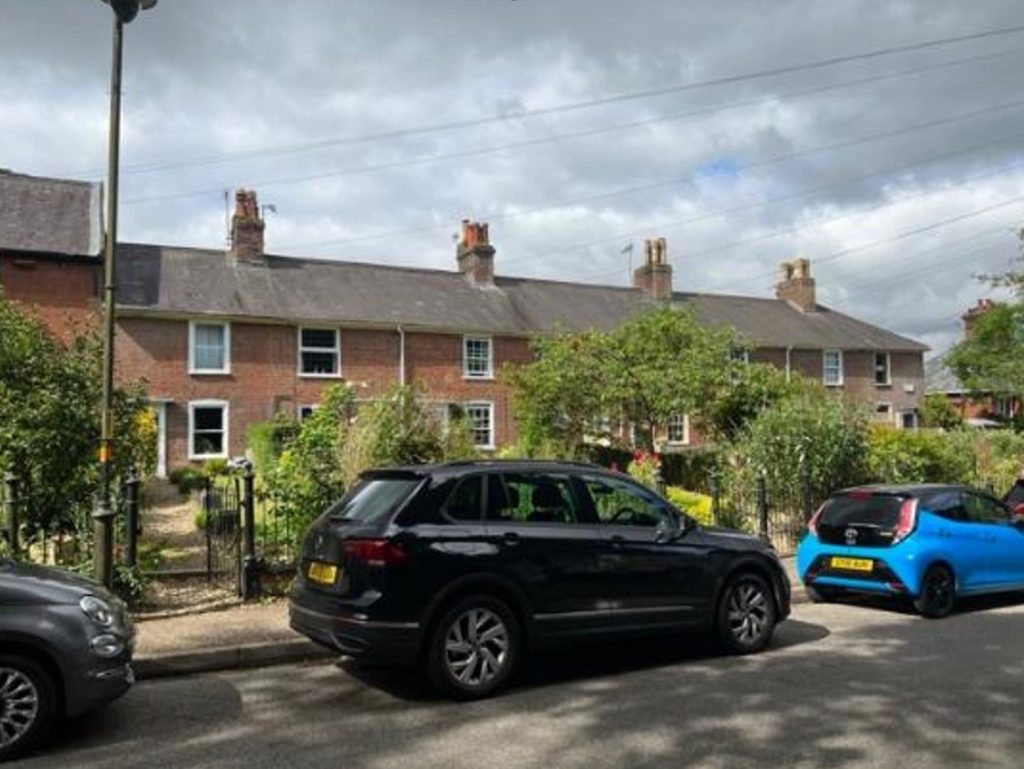
Blockhill Cottages are much more modest than the adjoining “villas”. They comprise a terrace of twelve set back behind long front gardens sloping up from the road.
In the February March edition of the Villager, an article was written by Carl Bates, entitled ‘BLOCK HILL: A VICTORIAN PROSPECTIVE. It was dedicated to the memory of the late Geoffrey Goreham.
They have a simple dignity and could almost be mistaken for Georgian. Original windows have small paned sashes, although a large number have been replaced with a variety of styles and materials. Original doors have flush “bead and butt’ panels. All but two of the original front railings survive.
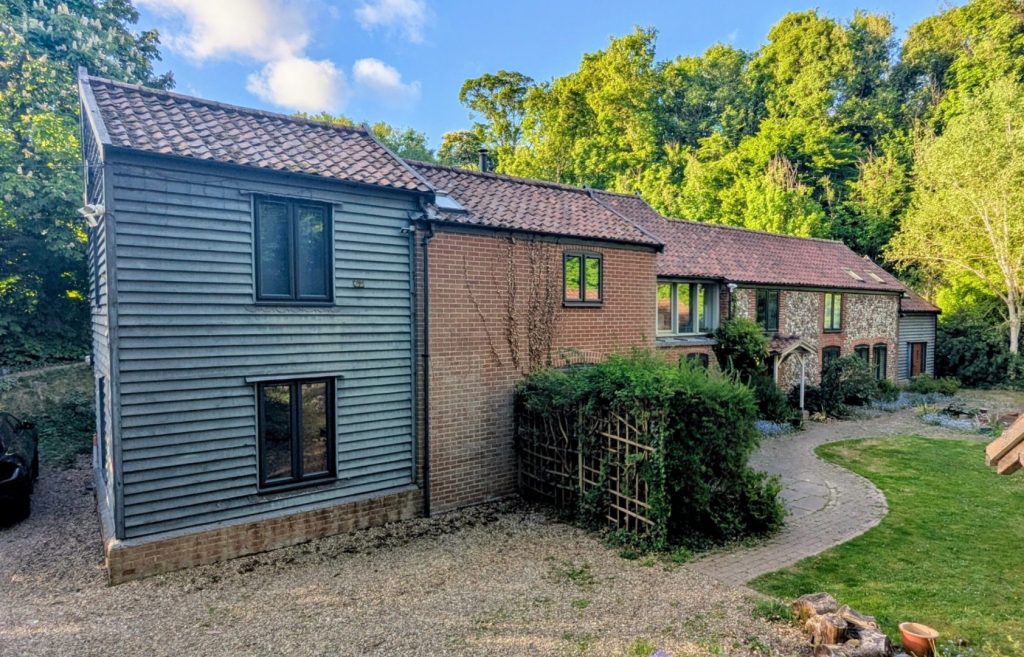
On the north side the only buildings are Crown House (Point House?) (Formerly Limekiln Cottage), set in a hollow of old lime workings, has undergone major alterations and extensions. It is a mix of flint, brick and painted boarding. The new work has been sympathetically done.
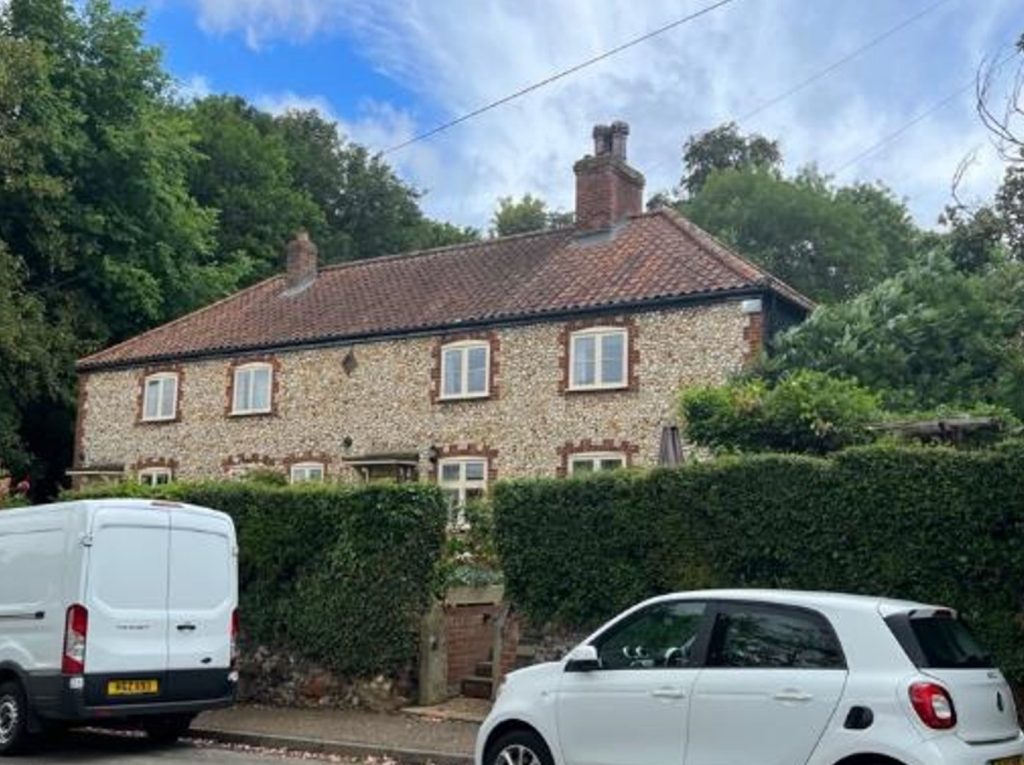
And Stone Cottages, comprising four cottages converted to two. Essentially rural in character, they are built, unusually, of white flints and must surely pre-date Colmans. Window replacements are reasonably sympathetic.
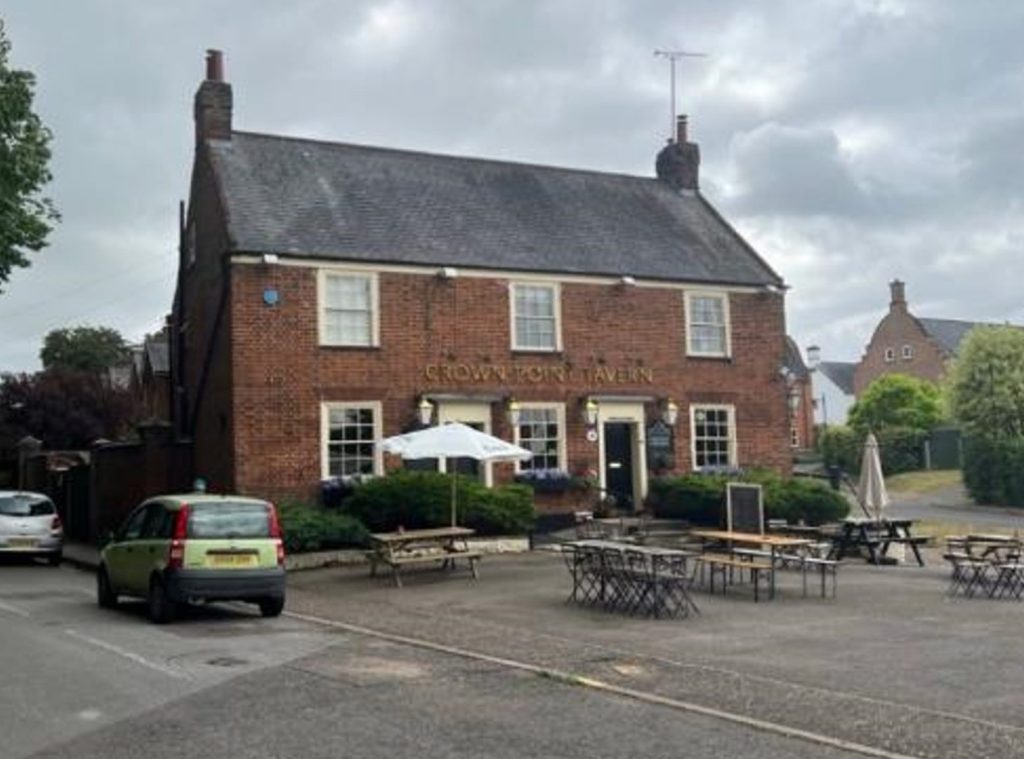
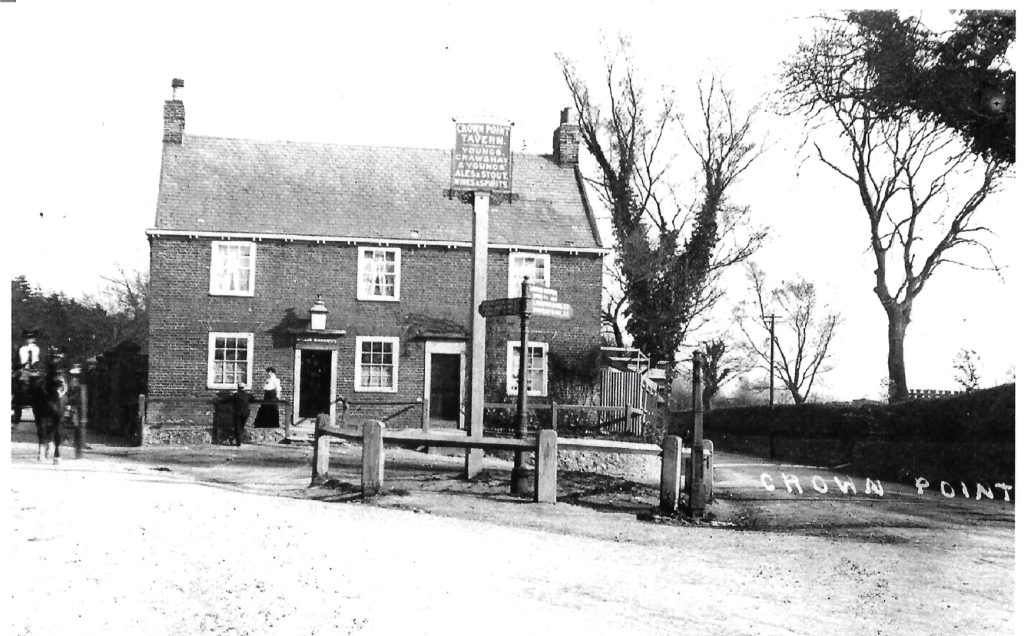
West of Crown Point Villas, Crown Point Tavern stands boldly at the V-junction with the former Loddon Road facing down the Street. Its previous prominence at the head of the village street has been somewhat diminished by Highland Crescent to the south, a group of late twentieth century houses constructed around a green facing north in front of the pub. The curved gables of the houses either side of the entrance to Hudson Avenue are an attractive feature, although slightly overbearing in this village position. Recently planted trees compliment this space. Crown Point Tavern is a grade II listed Georgian building dating from 1854. It has fine brickwork and doorways and small paned sash windows with shutters. The roof is slate and gabled, with end chimneys, and remnants of a high brick boundary wall with substantial piers survive at the rear. It has a tarmacadam triangular forecourt.
(2) Devon Way (formerly Loddon Road)
The north side of the road is bounded by a flint retaining wall which varies in height on top of which is a variety of garden fences, shielding the backs of the houses in Kirby Road. There are fine trees beyond Blockhill Cottages.
The wide grass verge on the south side has been retained, along with a banked hedge to the new development in Devon Way. A variety of sizes and styles of house, some ‘cottagey’ with casement windows, others in a more formal Georgian style loop round via Charolais Close beside the bypass, where the rising ground restrict views out of the conservation area. At the western end of Charolais Close views open up across the river valley to the wooded ridge beside and beyond County Hall. Substantial banks of planting hide views of the new development from the bypass to the west.