A historical journey through the streets and houses of Trowse Newton.
Appendix 1 - Townscape and Buildings
(4) The Street: west of the Manor Rooms
Quite different from the eastern section of the Street, this section is open: to the south over the Common, to the southwest towards the churchyard and its trees and to the northwest to the trees of the Vicarage garden and those along Whitlingham Lane beyond.
(a) North side
From the Manor Rooms to the garden of the former Vicarage the frontage is solidly built up.
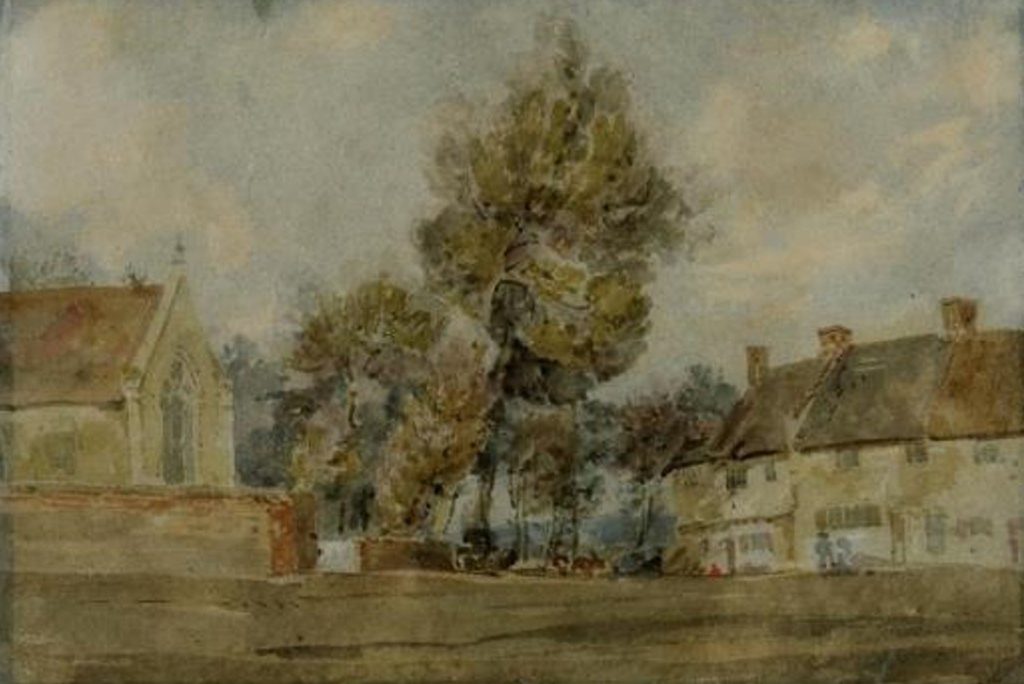
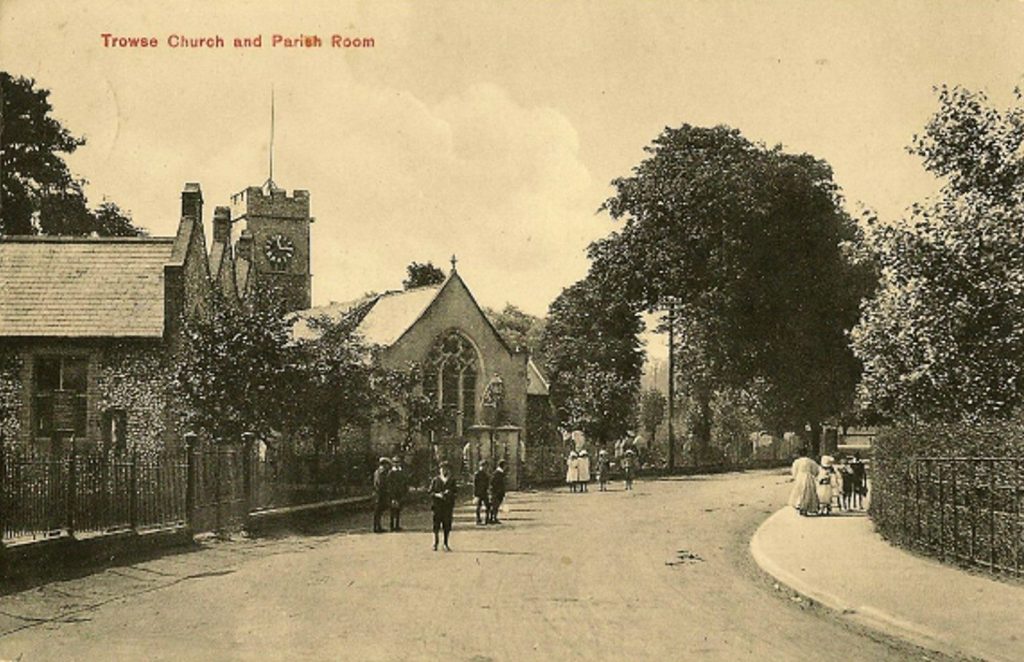
The picture above (from an unknown artist) shows the church to the left and the row of houses to the right that is now the Rectory. These were removed by Colmans
The style of the large former Vicarage is typical of the turn of the nineteenth- twentieth century. A complex plan-form is allied to a complex silhouette of roofs, gables, chimneys and bays and a mixture of brickwork, pebble dash and mock half timbering. Its date suggests it was financed by the Colman family. It stands in substantial grounds. To improve sight lines, the garden front has been moved back from the street. In its place is a wooden fence with concrete posts, on a rigidly straight line, which hardly does justice to the curve of the street or to the attractive setting of church and trees; while two small Prunus trees on the wide verge fail to make up for what has been lost.
Stanton Terrace is typical of the Colman development: red brick and pantiles with small paned sash windows under rubbed brick arches. It is the only terrace in the village with no rear access and therefore there are shared “tunnel entrances” to the back. Flint Cottages, a row of three in flint and pantiles, is older. The Shop (No. 1B) is rendered, but its small windows suggest a pre-Colman date. It has an attractive late nineteenth century shop front. No. 1 is a small double-fronted house of a well-proportioned straight forward design, late nineteenth century and possibly a Colman house.
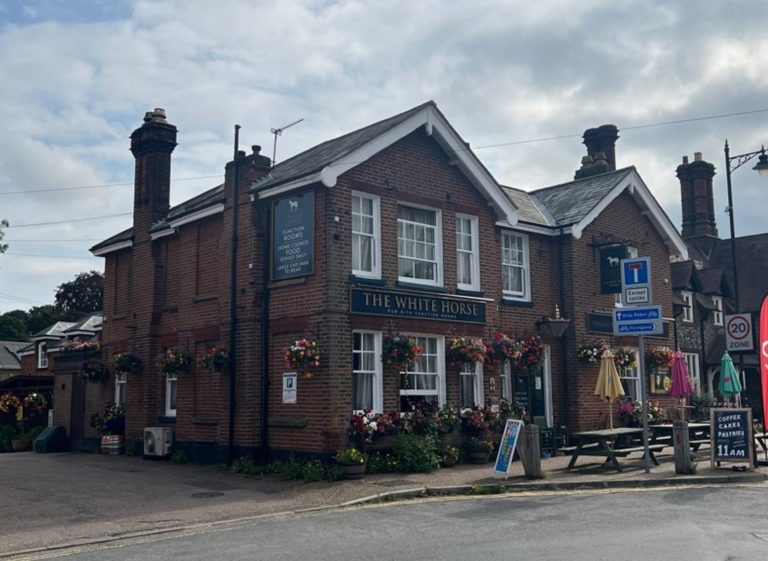
The White Horse public house dates from the late nineteenth century and replaced an inn of the same name, which stood on the Common. Its style is in harmony with that of the Colman terraces nearby. Buildings to the rear have been sympathetically converted from stables to an extension to the pub and living accommodation. The car park to the west and the newly widened footpath in front are both tarmacadam.
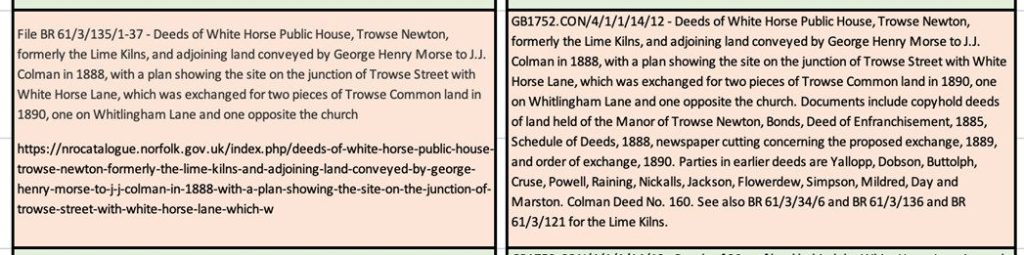
Below is the Colmans deed that is now with Lever Brothers at Port Sunlight after their acquisition of Colmans factory. The deed on the right is how Lever Brothers have archived it.
(b) South side
The railings to the Common are an attractive feature: oak posts with cast iron caps hold stout tubular horizontal rails. A drainage ditch (already noted on the north side of the Street), separates the Common from the meadow to the west. Vertical iron railings continue along the front of this meadow.
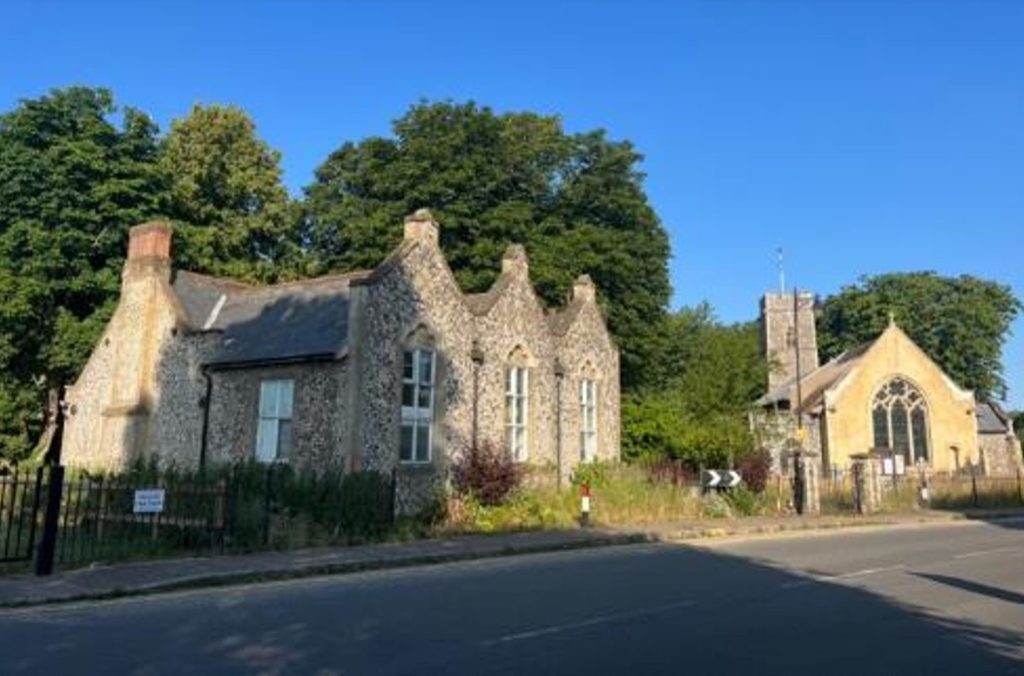
The former Church Hall, of flint, grey brick and slate, is in early Gothic Revival style and was rebuilt in 1899 on the site of the disused school. Its front railings have been removed but attractive ground planting makes up for this loss.
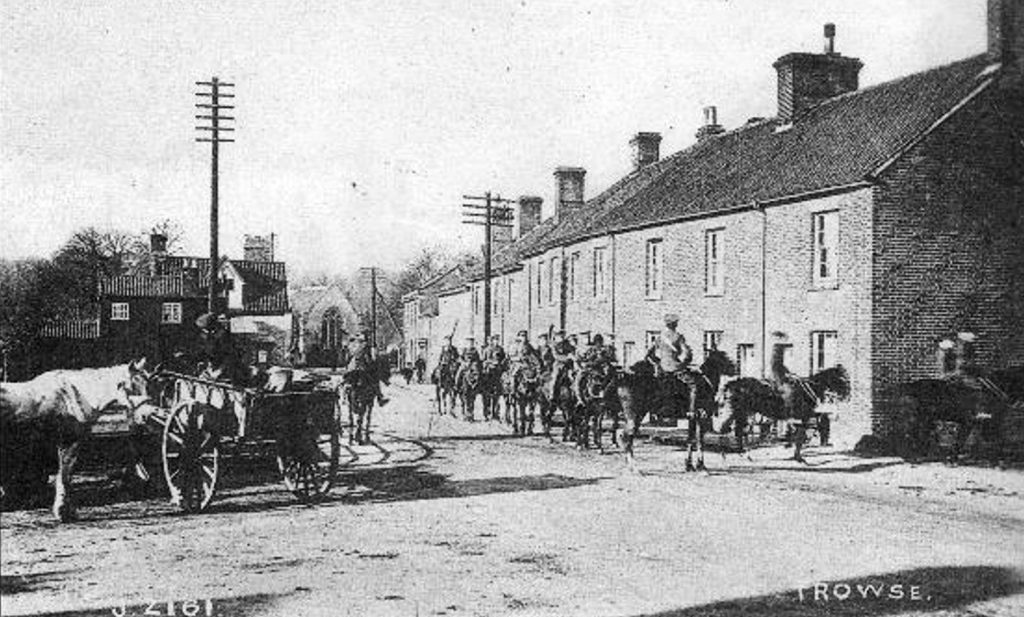
The building is now used by Copperdot Studios. The picture on the left indicates the railings that were removed at the vicarage to allow the ‘vision splay’ from Whitlingham Lane.
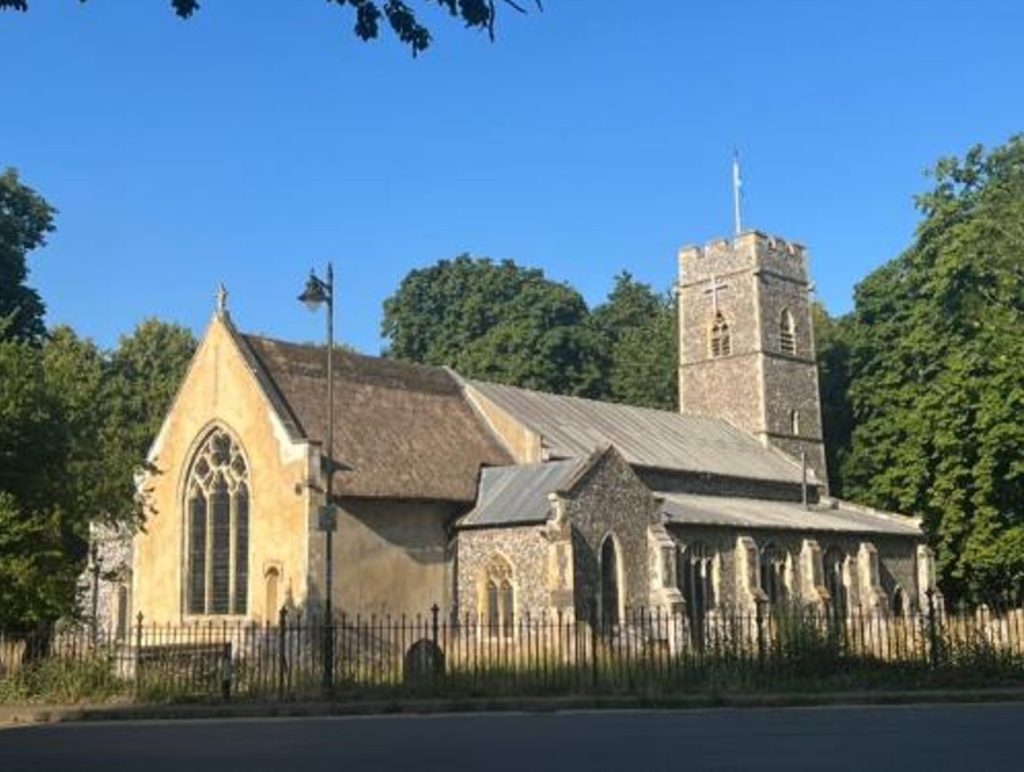
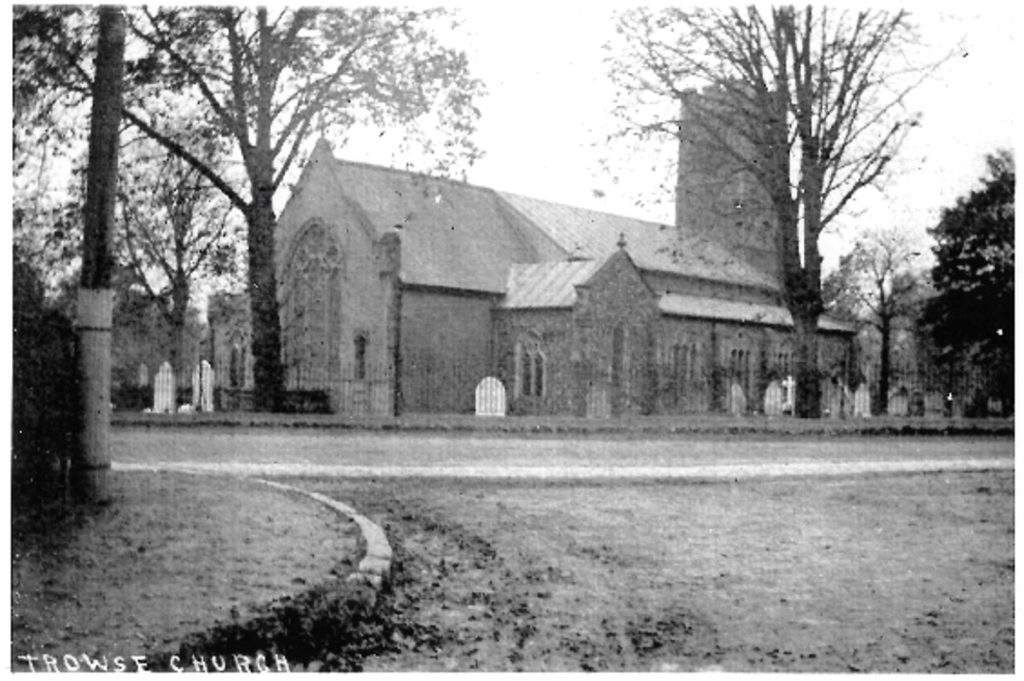
The Parish Church of St. Andrew has a thirteenth century chancel, which includes a splendid east window, a fourteenth century square tower and a fifteenth century nave. The north aisle was added in 1901, to accommodate the expanding population. Materials are flint, stone and lead. Railings at the front have survived.